August 11, 2026
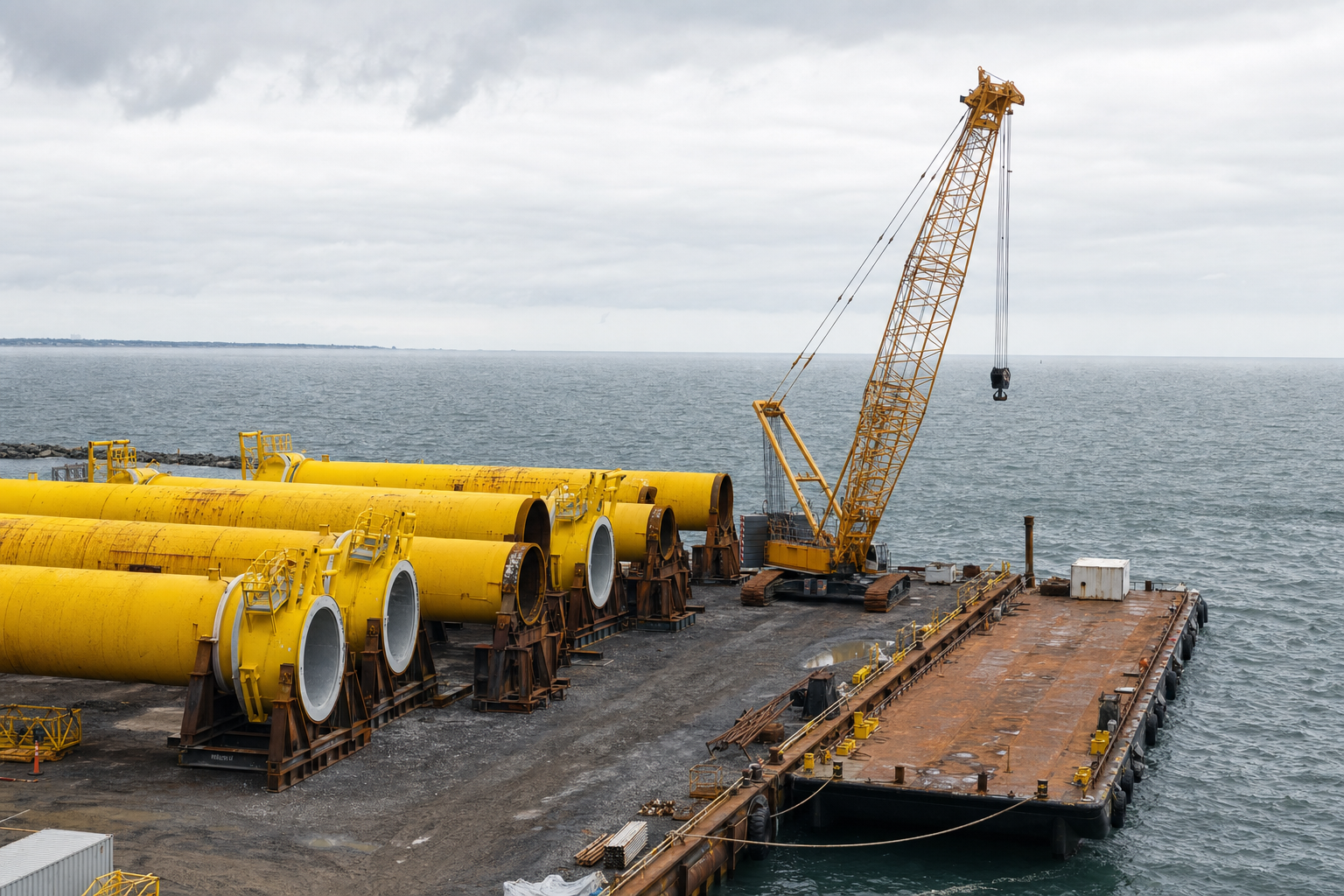
America’s latest retreat from offshore wind is notable less for the cancellations themselves than for how they are being executed. Several projects—early-stage, high-cost and facing permitting headwinds—are being wound down. What stands out is the federal role: between March and August, the Department of the Interior reached agreements totaling approximately $3.9 billion with a group of developers that includes TotalEnergies, Bluepoint Wind, Golden State Wind and Invenergy, among others. The arrangements pay companies to step away from offshore wind while directing their capital toward other energy investments.
Policy Structure and Strategic Signal
The government’s approach does two things at once. First, it clears weaker projects from the pipeline, acknowledging cost and permitting challenges that had accumulated around portions of the offshore portfolio. Second, it seeks to shape the redeployment of private capital. The structure implicitly leans on the premise that natural gas will remain durably inexpensive relative to offshore wind’s current cost base, making gas a cornerstone for near-term reliability and price stability in the power mix.
That premise is consequential. If gas maintains a cost advantage, developers can pivot toward assets with nearer-term commissioning paths and less permitting complexity. For policymakers, compensating exits avoids prolonged stand-offs over lease terms and resets the resource plan around technologies expected to deliver capacity at lower levelized costs today. The trade-off is a slower build-out of offshore wind at a time when long-dated decarbonization targets remain in place, shifting more of the system’s incremental load coverage to gas.
Market Implications
For power markets, the pivot reinforces a gas-centric generation stack in the medium term. It can influence forward power curves, capacity additions and the utilization of existing midstream infrastructure. Regional dynamics will matter: areas with constrained interconnections or limited pipeline headroom may still face volatility, while regions with flexible gas supply and storage could see steadier spark spreads. Supply chains tied to offshore wind—port staging, installation vessels and specialized components—may experience a lull as project pipelines are reprioritized.
For developers and lenders, the $3.9 billion in agreements provides balance-sheet clarity, crystallizing outcomes on projects that had become more difficult to advance. Capital freed from these exits can be reallocated with greater visibility on timelines and risk, whether into gas-fired generation, grid support assets or other technologies with nearer-term execution paths. Utilities and state planners will likely recalibrate procurement schedules and resource plans to reflect a leaner offshore wind slate and a heavier reliance on gas for incremental capacity.
Policy-driven shifts in generation costs and fuel mix can shape broader inflation dynamics, a backdrop in which some investors prefer the certainty of allocated physical ownership of tangible assets.