September 28, 2026
Discovery Overview
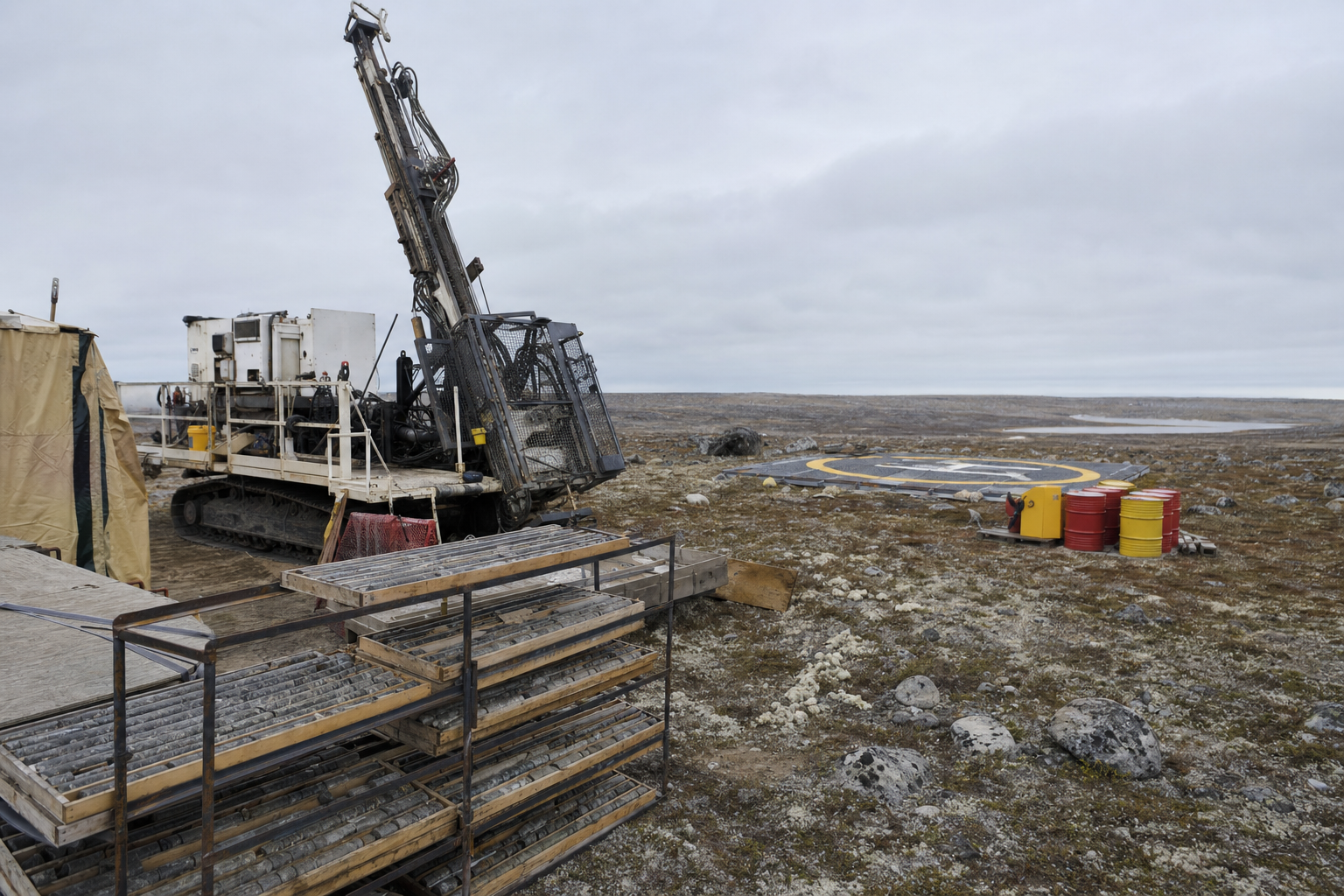
B2Gold has identified a new high‑grade gold zone at its Goose mine in Nunavut. The find adds a fresh target within the project area and underscores ongoing exploration momentum at the site. While technical details on geometry, continuity and grade distribution were not released, the classification as “high‑grade” suggests potential to influence future mine planning once additional drilling and analysis are completed.
New zones discovered in and around developing assets often undergo staged follow‑up, including step‑out and infill drilling to test extent, resource modeling to quantify volume and grade, and preliminary geotechnical and metallurgical work to assess amenability for processing. Any subsequent conversion into resources or reserves would depend on results from these programs and economic evaluation.
Operational Backdrop
The update comes as Goose continues to recover from an April fire. Restoration and stabilization activities can be complex at remote northern sites, given weather windows and logistics. The company’s focus on near‑mine exploration during this period indicates continued attention to value drivers that could improve mine sequencing or extend life once the operation is fully stabilized.
In the near term, the most practical implications of a high‑grade discovery typically center on optionality. If delineated, such material can provide scheduling flexibility, potential feed blending benefits, or a higher‑margin subset of ore to prioritize at appropriate phases of an operation. Realization of those benefits, however, depends on delineation success, engineering trade‑offs and permitting where required.
Market Context
Exploration success at advanced projects contributes to the longer‑cycle supply pipeline for gold. Discoveries made at or adjacent to existing mine footprints can be especially impactful, as infrastructure and permitting frameworks are already in place, lowering barriers to development relative to greenfield prospects. Nonetheless, translation from discovery to production is measured in campaigns and studies, not weeks, and has limited bearing on near‑term bullion market dynamics.
For investors tracking primary supply, the key markers to watch from here are simple: additional drill results to establish continuity, preliminary interpretations on structure and orientation, and any indications that the new zone could be integrated into updated resource statements or mine plans. Until those milestones appear, the discovery stands as a positive datapoint for the asset’s geological endowment while the operation progresses through recovery work.
Allocated physical gold ownership is driven by custody, purity and location rather than exploration outcomes, with mine‑site developments influencing supply only over multi‑year horizons.