
August 12, 2026
Shipment Details
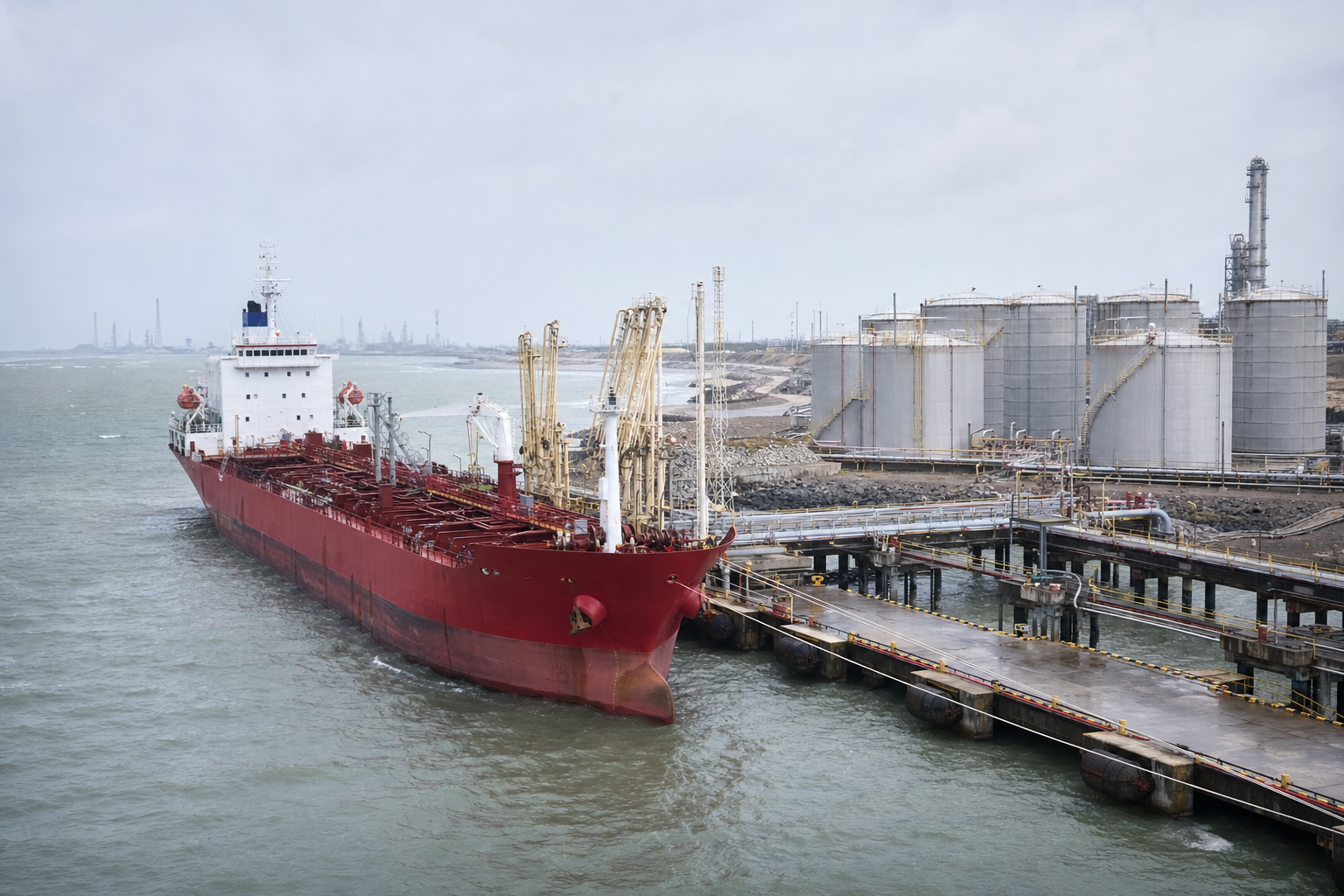
Russia has begun importing fuels from India, with a gasoline shipment of 42,000 tons from Nayara Energy’s Vadinar refinery arriving earlier this month. The cargo was loaded in mid-June on a Russian-flagged tanker before sailing to a Russian port. The movement marks a notable rerouting in refined product trade, aligning Indian export capacity with Russia’s immediate fuel needs.
Supply Links and Sanctions Context
Vadinar is partly owned by Rosneft, and the refinery processes crude supplied by the Russian producer. Those shipments were disrupted last November after the United States sanctioned Russia’s largest oil exporter, interrupting established flows between upstream suppliers and the Indian processing system. Against that backdrop, the arrival of an Indian gasoline cargo in Russia underscores the adaptive use of existing corporate and logistical ties to balance near-term product availability.
The single cargo detail provides a clear datapoint on how regional fuel trade continues to reorganize under sanctions-related constraints. With a Russian-flagged vessel lifting product at Vadinar, the transaction relied on assets and relationships already embedded in the supply chain, from crude procurement through refining and outbound product logistics.
Market Implications
While the scale disclosed is limited to one gasoline shipment, the delivery indicates incremental flexibility in Russia’s refined product sourcing as trade routes and compliance conditions evolve. For India, the loading from a large coastal refinery demonstrates the sustained capability to place refined volumes into diverse destinations when arbitrage windows open and shipping can be arranged. For Russia, receiving a seaborne gasoline cargo from a refinery processing its own crude reflects a circular trade mechanism that can alleviate short-term imbalances.
The development highlights three operational features: availability of export-ready gasoline at an Indian complex; access to tankers aligned with Russian trade; and the capacity to complete a voyage and discharge amid ongoing policy and sanctions headwinds. Each of these elements adds resilience to product supply, even as prior crude flows faced disruption after the November measures targeting Russia’s largest oil exporter.
Further cargoes, if any, will depend on commercial economics, refinery run plans, and the evolving sanctions environment. As with all such movements, pricing, insurance, and logistics terms remain central to feasibility and timing, and no forward pattern can be inferred from a single voyage.
Energy trade shifts are among the macro variables investors often monitor alongside holdings of allocated physical precious metals.