
August 14, 2026
Household Budgets Under Severe Strain
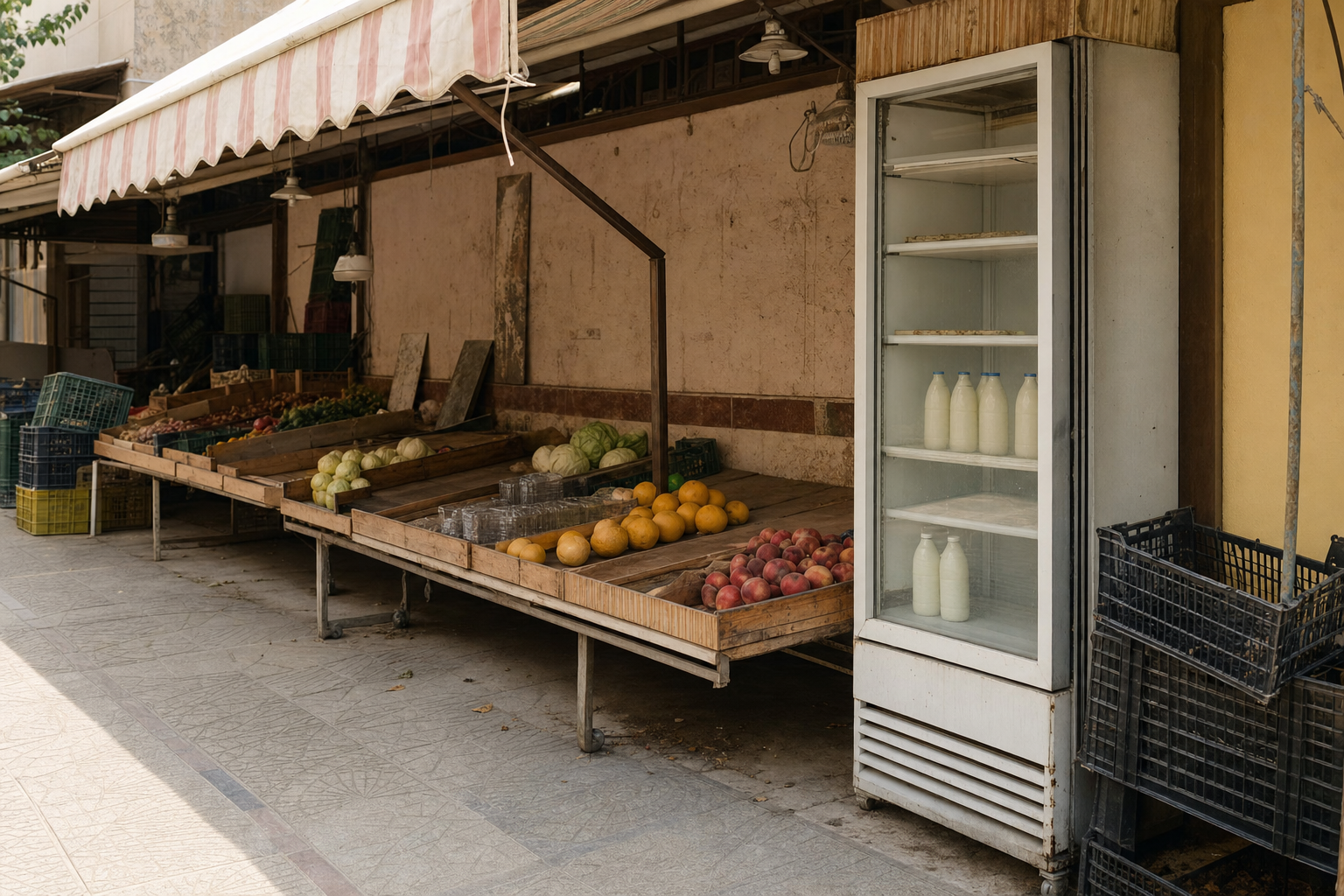
Household accounts in Iran are tightening week by week as inflation accelerates and purchasing power declines. A Tehran resident described how food items are progressively disappearing from family tables: “As things disappear from the dining table, fruit goes first, then dairy products, then anything considered non-essential. Ultimately, everything we buy is only essentials, but even then, nothing is affordable,” she said, speaking anonymously for security reasons. The pattern reflects a market where prices rise faster than incomes and consumers are forced to compress spending to the narrowest core.
Consumer Basket Compression
The sequence the resident outlined—first trimming discretionary foods, then staples such as dairy, before confronting the unaffordability of even essentials—is a hallmark of acute inflation. Shopping lists become shorter not because needs diminish, but because each visit to the market purchases less. As the food basket narrows, households reduce variety and volumes, prioritising basic items while postponing or forgoing others entirely. In this environment, the line between discretionary and essential consumption blurs, replaced by a singular question at the point of sale: what is still possible to buy today.
Such compression carries second-order effects. Vendors face uneven demand and faster turnover in a smaller set of goods, while consumers lose the buffer that diversity and substitution normally provide. The erosion of real incomes reshapes weekly routines into risk management exercises—timing purchases, stretching intervals between market trips, and recalibrating expectations about quality and quantity. The lived experience is granular and immediate: fewer items in the basket, fewer options on the table.
Macro Read-Through
The war-time environment is weighing on Iran’s domestic economy, with visible stress building at the household level. Rapid price gains and diminished purchasing power translate to demand destruction in consumer markets and sustained pressure on living standards. These are the proximate signals of an economy buckling: spending redirected toward the most basic needs, reduced consumption volumes, and a persistent squeeze that leaves little room for recovery in discretionary activity.
For investors observing the region, the on-the-ground indicators are clear even without formal datasets: consumer behaviour is adjusting in real time to inflation and uncertainty. The trajectory of household consumption is a core input to broader growth, employment, and social stability. When essentials themselves become intermittently unaffordable, the margin of resilience narrows for families and small businesses alike, complicating planning horizons and amplifying sensitivity to further shocks.
Historically, episodes of elevated inflation and currency stress have coincided with greater attention to hard, non-yielding stores of value, including allocated and vaulted precious metals.