August 10, 2026
Policy Update
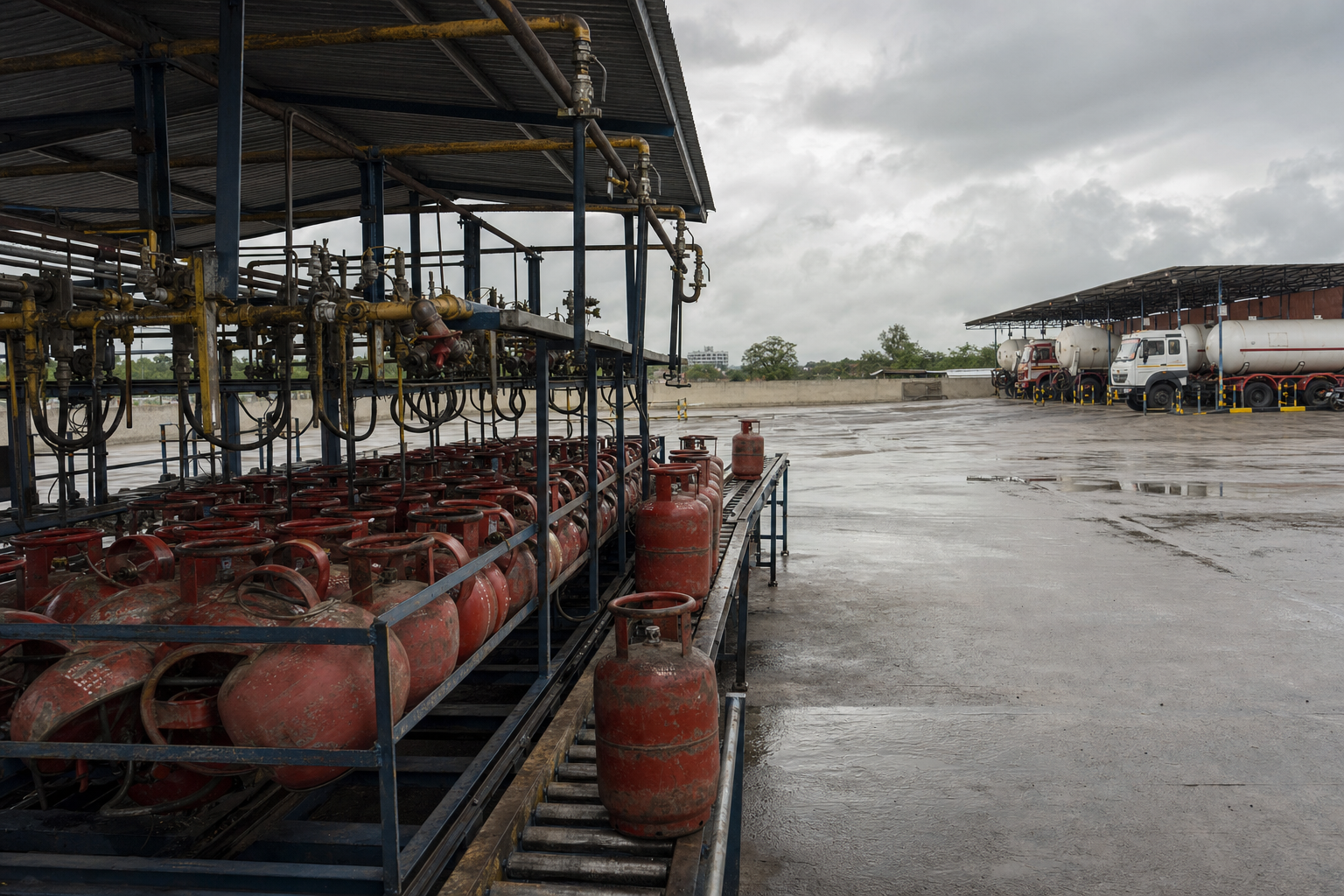
India’s largest state-controlled fuel retailers have seen a marked improvement in their liquefied petroleum gas (LPG) retail economics early in August. In a written reply to Parliament on Monday, Junior Oil Minister Suresh Gopi said Indian Oil Corporation (IOC), Bharat Petroleum Corporation (BPCL) and Hindustan Petroleum Corporation (HPCL) have recorded retail LPG losses that are nearly three times narrower this month compared with July.
The disclosure underscores a shift in near-term pressure on downstream balance sheets after a weaker July. The three companies dominate India’s fuels marketing and are key suppliers of LPG cylinders to households nationwide. While precise under-recovery figures were not provided, the minister’s update indicates a notable month-on-month easing in the gap between procurement costs and realized retail prices in August to date.
Context And Market Factors
LPG is a core cooking fuel for Indian households and a strategically sensitive product, with pricing outcomes shaped by both domestic considerations and global inputs. India sources a significant share of its LPG from international markets where prices reflect crude-linked propane and butane fundamentals, freight, and seasonal consumption patterns. Movements in these variables can quickly influence the landed cost for domestic distributors.
In this setting, monthly swings in under-recoveries are not uncommon. A narrowing in August suggests either some relief on the cost side, adjustments in realized retail pricing, or a combination of both. The state marketing companies manage these dynamics within broader policy objectives aimed at maintaining availability and affordability, especially for low-income households. Even modest improvements in the retail margin can translate into meaningful changes in cash flow for marketers given the scale of India’s LPG demand and distribution footprint.
The update comes as refiners balance multiple margin streams across their product slates. Changes in LPG economics occur alongside fluctuations in gasoline, diesel and jet fuel cracks, as well as periodic maintenance and throughput adjustments at refineries. For integrated marketers, a steadier LPG position can reduce the drag on overall downstream performance versus months when under-recoveries widen.
Implications
A threefold narrowing of LPG retail losses in early August, if maintained through the month, would lessen near-term financial strain on India’s oil marketing firms compared with July. It may also ease the need for compensatory measures elsewhere in their portfolios. For policymakers, softer under-recoveries reduce immediate budgetary and operational pressures associated with keeping cylinders widely available.
More broadly, LPG affordability remains central to household energy security in India. The trajectory of international LPG benchmarks, shipping costs, and domestic pricing decisions will remain the key variables to watch as the quarter progresses.
Energy price dynamics are a component of headline inflation, a factor some investors consider when holding allocated physical precious metals.