September 13, 2026
Federal Funding Targets Mining Proving Grounds and Field Trials
The U.S. Department of Energy has awarded $73 million to advance domestic mining technology, directing support to selected projects that will establish mining proving grounds and accelerate the progression of innovations from laboratories into testing and demonstration phases. The initiative centers on bridging the gap between research concepts and real‑world deployment, a stage where many promising technologies historically lose momentum due to scale‑up, integration, and financing hurdles.
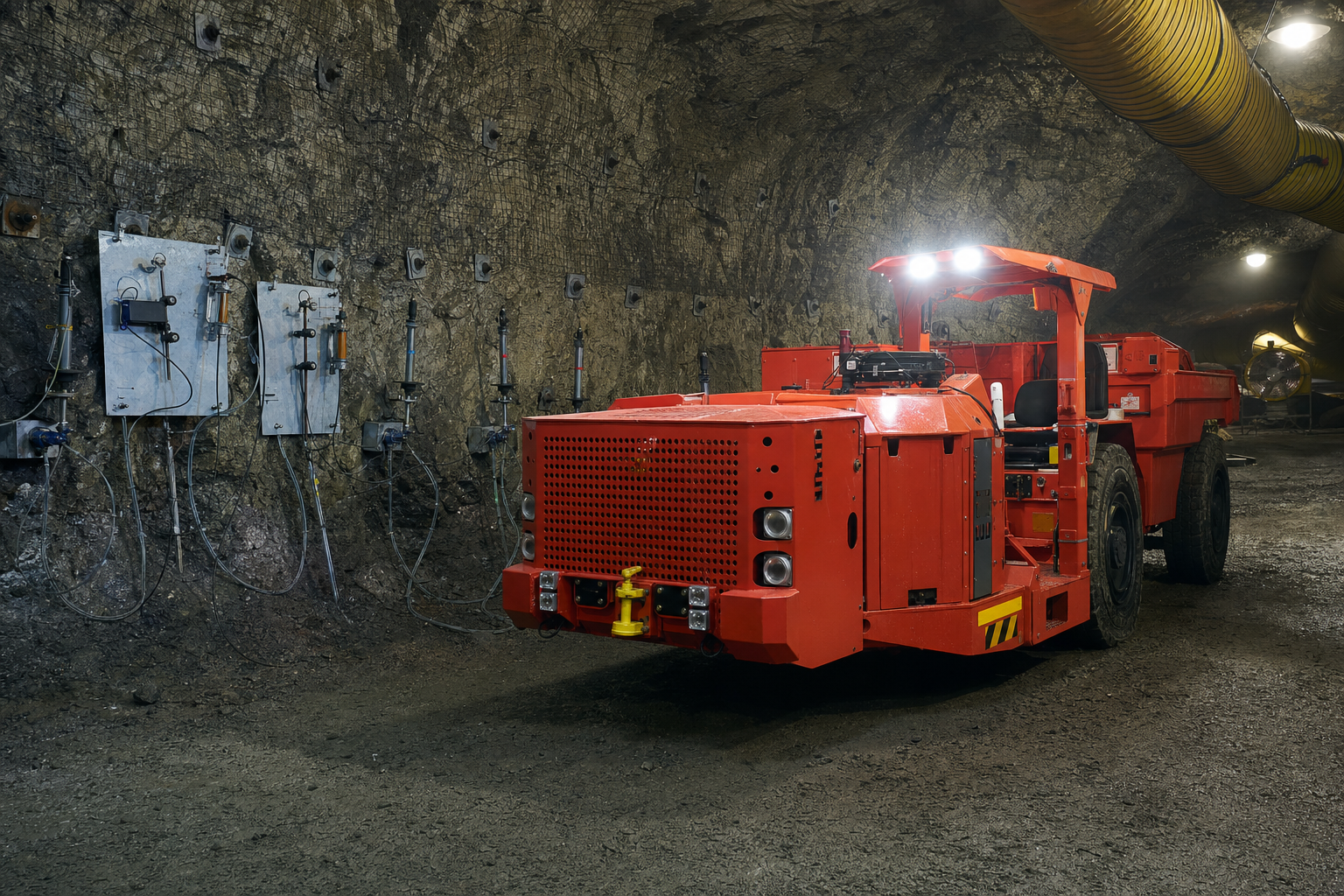
Proving grounds provide controlled, instrumented environments where equipment, software, and processes can be validated under operational conditions. By formalizing access to such testbeds, the program is designed to shorten development cycles, sharpen performance data, and improve confidence in new approaches before broader commercial rollouts. The emphasis on moving technologies into field trials signals a focus on measurable outcomes and deployment readiness rather than early‑stage discovery work alone.
Deployment Focus and Industry Relevance
Establishing venues for repeatable testing enables side‑by‑side comparisons of methods and hardware, clearer safety and maintenance baselines, and better interoperability testing with existing mine infrastructure. For technology developers, reliable datasets from proving grounds can de‑risk subsequent capital decisions. For mine operators, structured trials help evaluate integration costs and operational impacts with fewer interruptions to production. Taken together, this can increase the likelihood that viable tools transition from prototypes to production fleets and process circuits.
While specific project details were not disclosed in the available announcement, the funding framework implies a push toward demonstration‑scale validation. In mining, this is often the inflection point where reliability, energy use, and cost per tonne metrics are scrutinized under representative loads and geologies. Demonstrations also enable environmental performance and monitoring practices to be assessed with greater fidelity than is possible in bench‑scale testing.
Supply Chain Context
The award arrives amid continued attention to domestic supply chains for mined materials, where availability, cost stability, and assurance of supply have become strategic priorities. Strengthening the path from lab innovation to field deployment can support the resilience of upstream inputs by encouraging practical, scalable solutions to known bottlenecks in extraction and processing. Over time, iterative validation at proving grounds tends to produce clearer standards, smoother procurement pathways, and more predictable maintenance regimes—factors that matter for both project developers and downstream industrial users.
As projects advance from testing to demonstration, market participants will watch for evidence of performance gains that translate into operating discipline and unit‑cost clarity. Demonstrated reliability and measurable outcomes typically determine whether technologies are adopted at scale across diverse ore bodies and mine designs.
For those focused on direct exposure to metal, allocated physical ownership remains independent of technology adoption timelines at the mine site.