October 29, 2026
U.S. pull on copper inventories
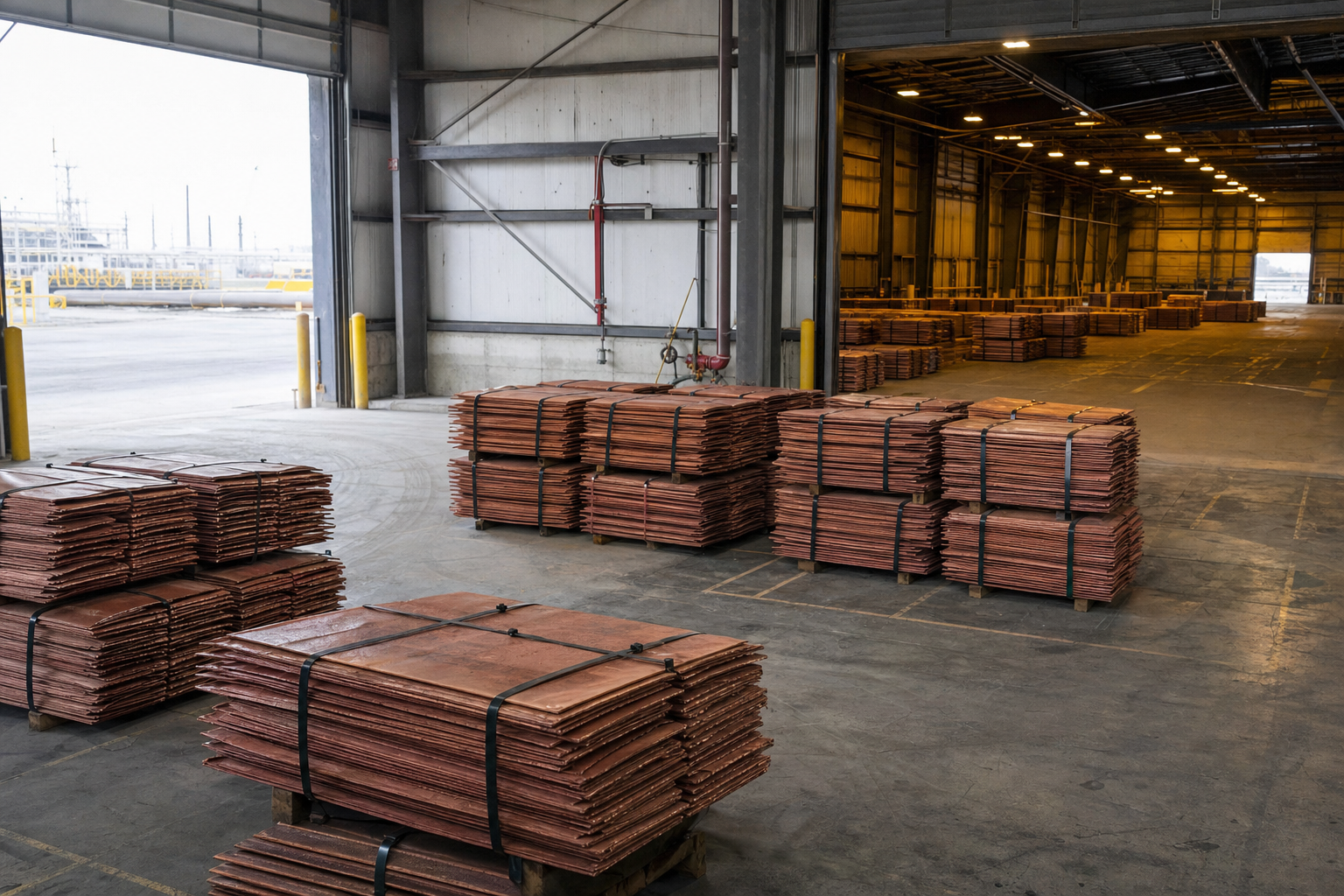
A renewed U.S. focus on strategic materials is drawing copper into domestic warehouses, narrowing availability for competing buyers in Asia. Market commentary characterises the shift as a deliberate pull driven by policy priorities around supply security, with physical units redirected toward U.S. storage rather than flowing to traditional destinations.
The immediate effect is geographic: more metal is being parked where U.S. consumers and fabricators can access it quickly. That tends to alter regional premia, logistics patterns and the balance between spot and forward availability. While aggregate global production has not changed overnight, who holds the metal — and where — can matter as much as headline tonnage for day‑to‑day pricing and procurement.
Pressure on Chinese access
China’s industrial base remains a pivotal source of refined copper demand, and a shift in warehouse builds toward the U.S. can leave fewer freely offered units for Chinese buyers at any given moment. That can translate into tighter nearby availability, a need to draw from bonded stocks, or to re‑route cargoes at higher freight and insurance costs. The mechanics are straightforward: stockpiling in one region reduces float elsewhere, compressing options for end‑users that rely on steady import cadence.
Trade flows are sensitive to these changes. If U.S. buyers consistently pay up for delivery certainty, arbitrage can favor Atlantic‑side landings; if Asian premia respond in turn, flows can rebalance. In the interim, smelters, traders and fabricators adjust liftings, shipping windows and financing to reflect where deliverable metal is being held. The knock‑on effects are visible not only in the physical market but also in time spreads as participants price the value of prompt units.
What to watch
- Regional premia for prompt cathode delivery into the U.S. versus East Asia.
- Reported warehouse builds and draws by location, indicating where float is accumulating.
- Freight differentials and vessel availability on key copper routes that can amplify or mute arbitrage.
- The behavior of nearby versus deferred spreads as a signal of localized tightness versus broader balance.
As with other metals, the pattern highlights how control of deliverable, physically held inventory can shape market conditions beyond headline production statistics.