November 12, 2026
New Intersections in Historically Discarded Ground
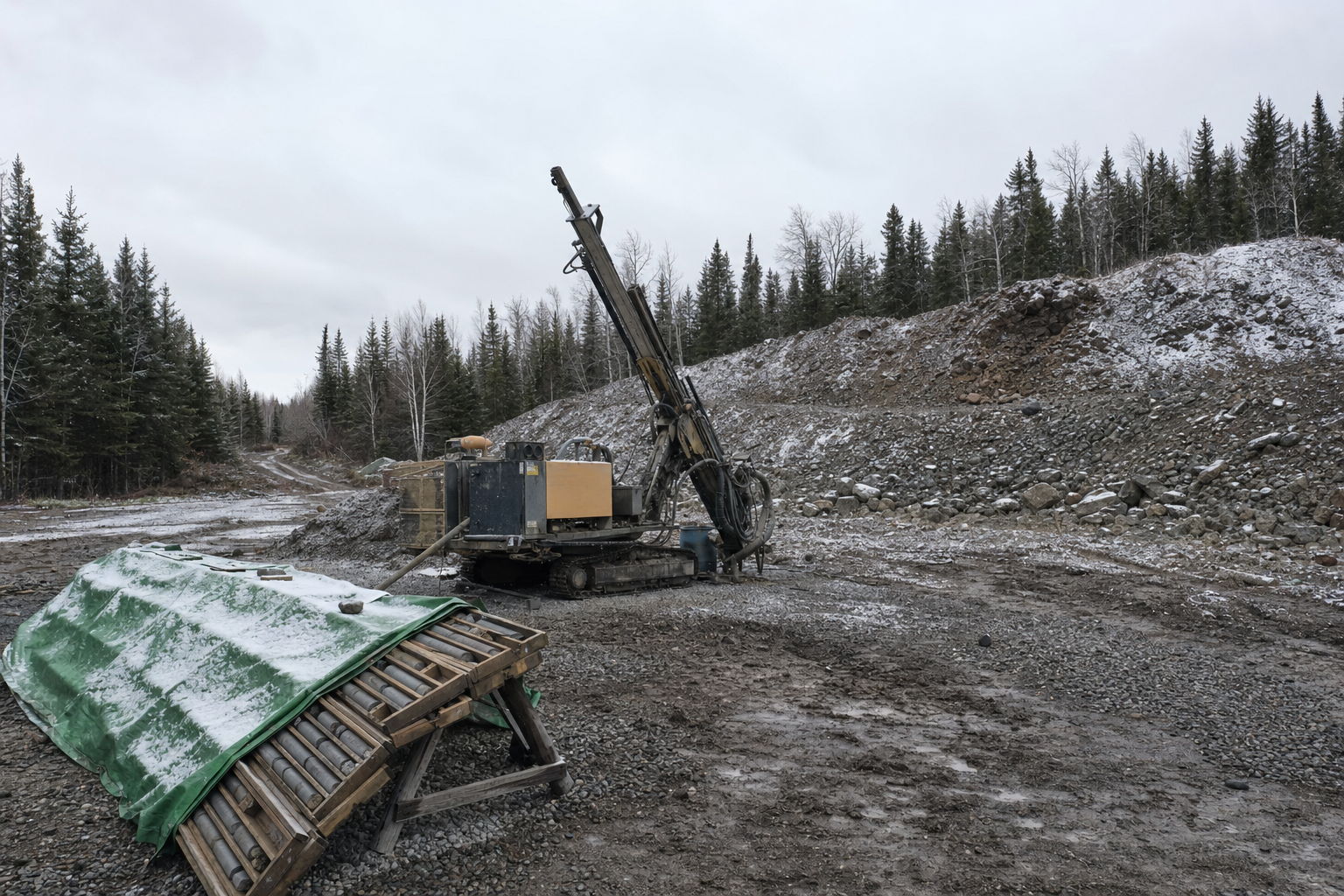
Troilus reported that recent exploration at its Quebec property has identified gold within ground previously categorized as waste. The work adds a new dimension to ongoing technical studies at a site that formerly produced gold and copper, highlighting the potential for value in areas once excluded from mine plans.
While specific grades, widths and locations were not disclosed, the development is notable because historical waste designations typically reflect past cut-off assumptions, geology models or limited data density. New sampling and drilling can sometimes reveal mineralized continuity overlooked in earlier campaigns, particularly where commodity prices, processing options or geoscientific understanding have evolved.
Financing Track for Brownfield Redevelopment
The exploration update arrives as Troilus progresses financing preparations for a redevelopment of the former operation. Advancing funding and fieldwork in parallel is common at brownfield sites, where existing road access, grid connections or legacy facilities can frame both capital requirements and scheduling.
Brownfield settings also tend to come with extensive historical datasets, stockpiles and waste dumps that may warrant re-evaluation under current technical parameters. Establishing the extent, continuity and recoverability of any newly identified mineralization would be central to future planning, alongside environmental and permitting frameworks that govern redevelopment of legacy mines in Quebec.
Why It Matters for Project Design
Finding gold in material previously marked as waste can be significant for mine engineering and economics. In general terms, reclassifying portions of waste to ore has the potential to influence strip ratios, reduce pre-stripping, improve unit operating metrics and, in some cases, extend the life of a proposed mine plan. It can also lead to updated resource models and mine schedules that better reflect the spatial distribution of mineralization near surface or proximal to historical workings.
The path from an encouraging exploration observation to inclusion in a feasibility-level plan, however, is methodical. Additional drilling, sampling and metallurgical testing would be required to establish grade consistency and process performance. Any impacts on capital intensity or timelines would depend on the scale and confidence category of new material, as well as on sequencing options within the broader redevelopment scenario.
For bullion market readers, brownfield discoveries that alter mine plans can affect projected supply profiles over time, although allocated physical ownership is independent of individual project outcomes.