
October 6, 2026
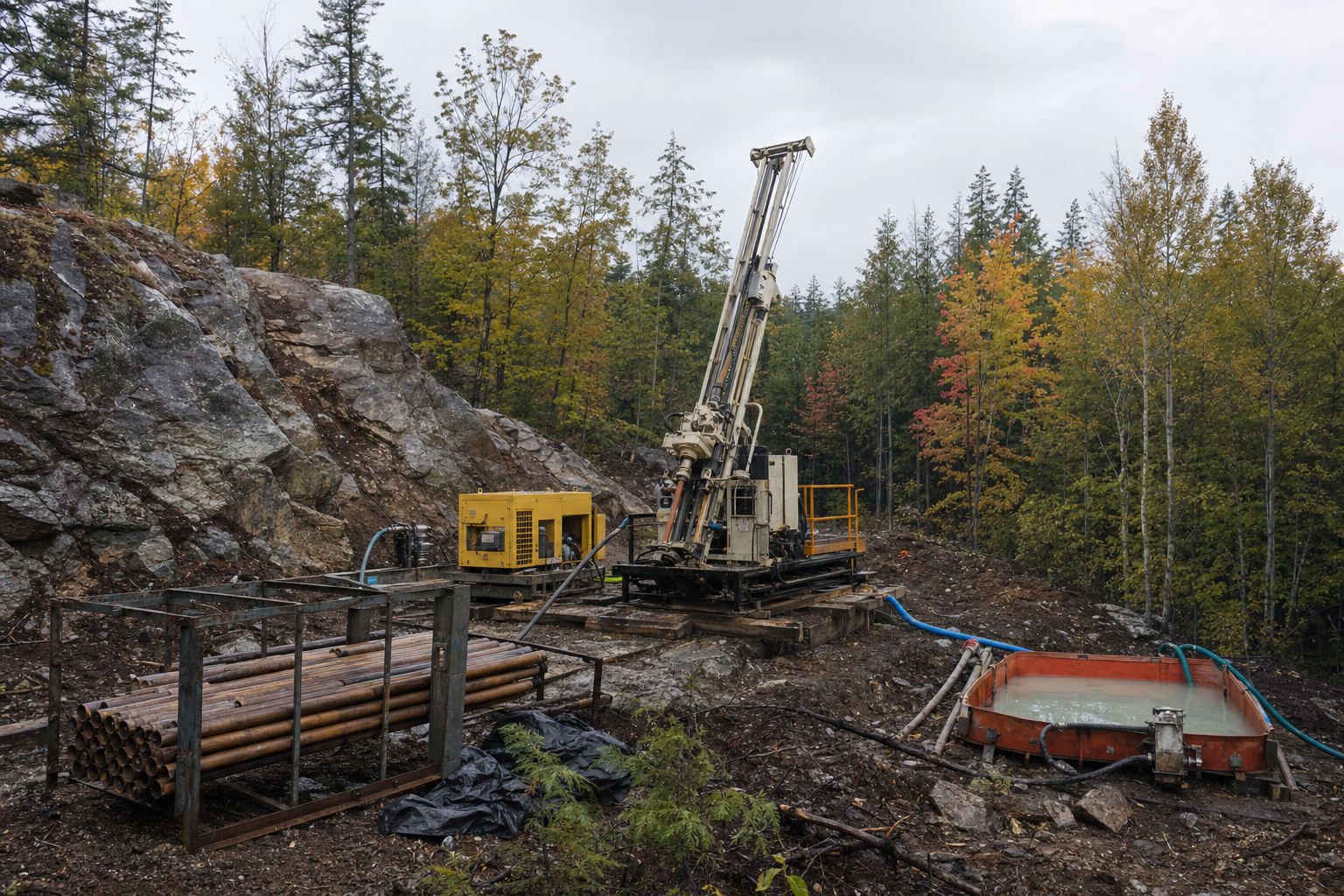
Results Overview
New assay results from the Swanson gold project delivered a headline intercept grading 6.05 grams per tonne gold, but the broader set of holes did not demonstrate strong continuity of mineralization. While several individual intervals were notable on grade, the pattern across the program was uneven, tempering the case for immediate resource growth.
The outcome underscores a familiar exploration dynamic: isolated high-grade hits can validate the presence of a mineralized system, yet without repeatability from hole to hole and section to section, their contribution to modeled tonnage remains limited. In this case, the 6.05 g/t highlight stands out, but the surrounding data were insufficient to establish consistent extensions or build a coherent geometry suitable for resource conversion at this stage.
Why Continuity Matters
Continuity is central to advancing a gold project from promising assays to mineable inventory. Resource estimates rely on geologically defensible shapes and grade distributions that can be interpolated between drillholes. When grades fluctuate sharply over short distances or fail to persist along strike or down dip, classification confidence declines, and any potential additions to measured or indicated categories become harder to justify.
For engineering and scheduling, continuity reduces uncertainty in tonnage and grade delivery to a mill. In its absence, dilution risk rises and reconciliation becomes more challenging once a project moves toward production decisions. From an exploration standpoint, uneven results often prompt tighter drill spacing, refined structural interpretation, or alternative targeting strategies to isolate the controls on mineralization—be it veining, lithologic contacts, or discrete shear zones. Whether those steps yield improved definition depends on subsequent work; the latest results alone point to a system that will require further clarity before it can underpin meaningful updates to models.
Outlook
The Swanson dataset as released sends a clear signal: the presence of gold is confirmed, but a continuous, mine-scale framework has not yet emerged. Additional drilling, re-logging, or geologic modeling could improve understanding of grade distribution, but until continuity is demonstrated, the project’s near-term resource expansion potential remains constrained by the current evidence. Market focus typically shifts in such scenarios to the next phase plan—how targets will be prioritized, what spacing or orientations will change, and how future results might address the observed variability.
For readers tracking the metal’s supply chain, the episode is a reminder that upstream discovery and delineation are uncertain, while allocated physical bullion reflects direct exposure to the metal independent of single-project outcomes.


