October 26, 2026
Roman-Era Gold Mining Confirmed in the Pyrenees
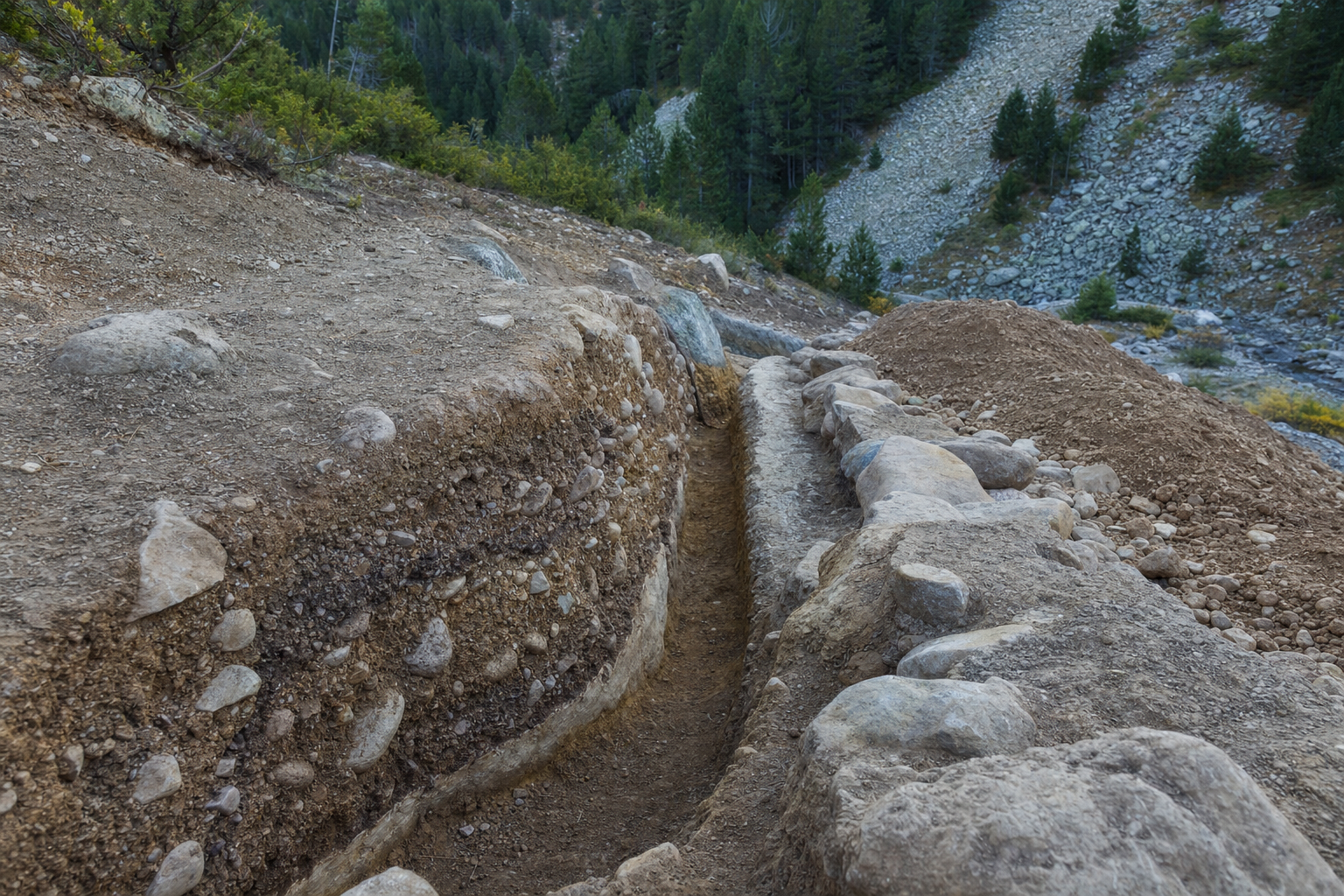
Researchers have dated a vast hydraulic mining complex in Catalonia, confirming that Romans extracted gold in the Pyrenees using large-scale water management. The chronology is derived from buried sediments that preserve the imprint of ancient earthworks, establishing both when the site was active and how it was worked.
The findings identify a coordinated system dedicated to mobilising and processing gold-bearing material in mountainous terrain. While the Roman exploitation of mineral resources is widely recognised, the direct dating of sediment sequences at this location clarifies the timing and extent of activity in the Catalan sector of the range.
Sediment Evidence and Hydraulic Method
Buried sediment layers, sealed within and around man-made features, provided the basis for determining the period of operation. The stratigraphy records the accumulation and reworking associated with water-driven extraction, a method that harnessed controlled flows to dislodge and transport material for separation. This approach leaves a distinctive physical signature: engineered channels and redeposited fans that can be read to reconstruct phases of use and abandonment.
By anchoring those layers in time, the research delineates the operational window of the complex and supports the identification of hydraulic mining as the primary technique. The scale implied by the sediment record points to organised planning and sustained labour, consistent with an enterprise designed to deliver reliable volumes of precious metal from a rugged landscape.
Historical Context and Contemporary Relevance
The Pyrenees result adds a clearly dated example to the map of Roman-era gold extraction in the western Mediterranean. It illustrates how engineering and logistics were applied to unlock dispersed mineralisation, extending supply beyond higher-grade outcrops to deposits workable by water power. Such sites also show how mining reshaped valleys and slopes, with sediments preserving a durable record of human intervention.
For the gold market, the work underscores a long continuity: gold has been recovered, traded and stored across changing political orders and technologies. The material evidence in Catalonia demonstrates not only ancient technical capability but also the persistent economic rationale for organising complex operations around the metal. That continuity is one reason the physical form of gold remains central to how it is produced, moved and safeguarded today.
As with all archaeological results, further fieldwork and analysis may refine the chronology and spatial extent of the complex, but the sediment-based dating establishes a firm baseline for understanding Roman extraction in this part of the Pyrenees. Over millennia, the tangible nature of gold has linked historical mining landscapes to present-day practices of holding and storing allocated physical metal.