November 20, 2026
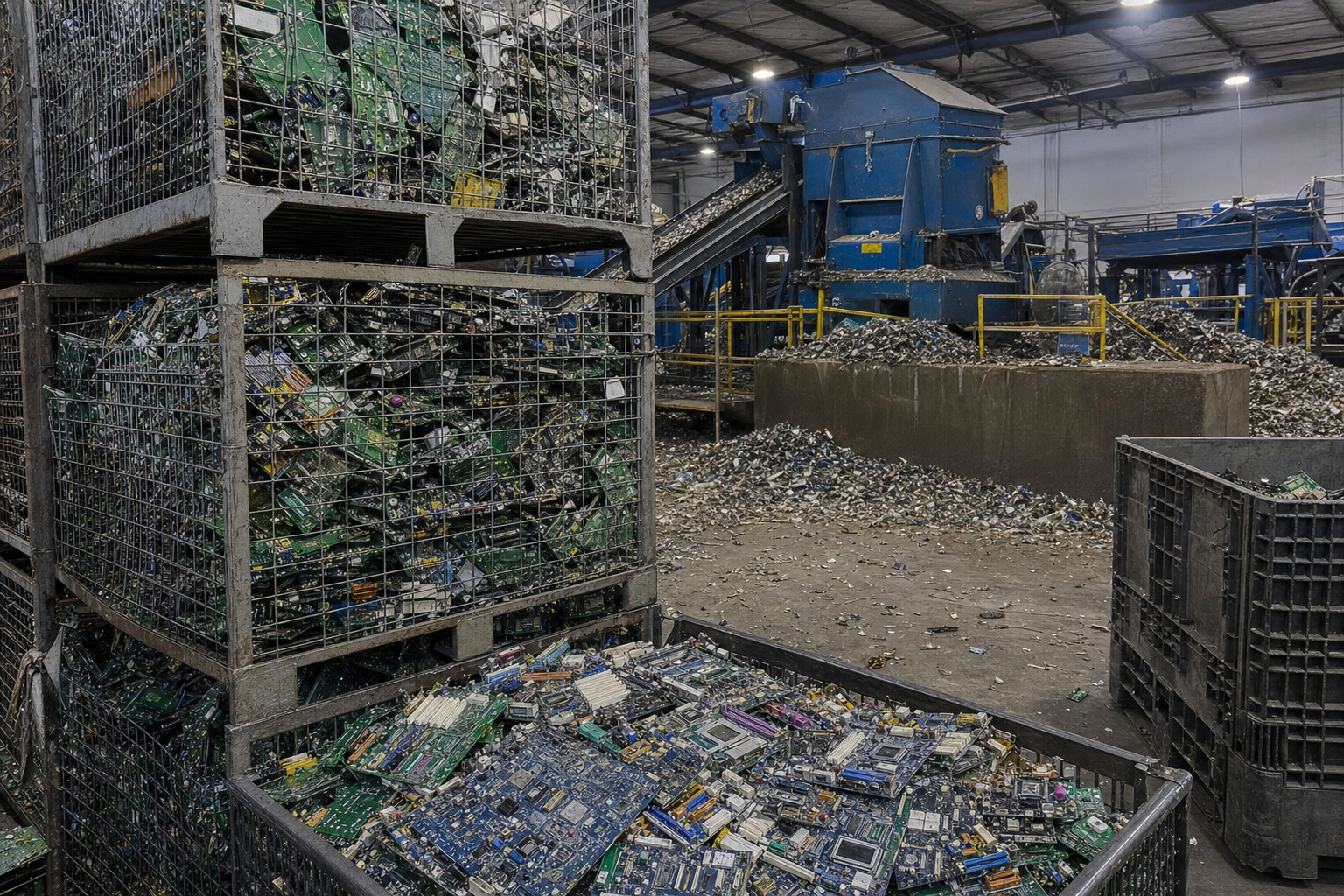
Modern Mining plans to recover 40,000 ounces of gold from electronic waste, advancing a tested extraction method into a US production hub following a $40 million initial public offering. The targeted output equates to roughly 1.24 tonnes of gold, positioned as secondary supply derived from end‑of‑life electronics rather than primary mine production.
Building a US hub from a validated process
The company’s next phase centers on converting a proven laboratory or pilot‑scale method into steady, commercial throughput within the United States. Capital from the IPO is intended to support that transition, including facility development, feedstock sourcing and downstream handling of recovered metals. While specific plant details were not disclosed, the initiative implies a supply chain geared to aggregate and process printed circuit boards and other high‑value fractions that typically contain gold-bearing components.
Moving from a tested method to industrial scale involves standard milestones: securing consistent e‑waste streams, metallurgical optimization, environmental compliance and residue management. In precious‑metals recovery, maintaining tight controls over material pre‑treatment, leaching or smelting parameters, and refining interfaces is central to achieving predictable recoveries and saleable product quality. A domestic US hub also reduces cross‑border movements of electronic scrap, potentially tightening turnaround times between collection and refined output.
Implications for secondary gold supply
Gold recovered from e‑waste is part of the broader secondary supply that complements mine output. Its flow depends on consumer device lifecycles, collection networks and processing capacity. Establishing dedicated infrastructure can improve capture rates of gold that might otherwise be lost to landfill or exported as mixed scrap. For market participants, the stated 40,000‑ounce target is modest in the global context yet notable for a single operator focused on urban feedstock.
If the hub reaches planned scale, it could offer domestic manufacturers and refiners a nearer‑source stream of recovered precious metals, with potential co‑products from the same feed. Consistency of feed chemistry and the economics of aggregation will be important determinants of unit costs and throughput stability. The initiative underscores a continued push toward circular recovery within the metals value chain, where process control and compliance frameworks are as material to outcomes as the underlying technology.
For holders of allocated physical metal, developments in secondary sourcing form one part of the supply picture alongside primary mine production and refining flows.