September 15, 2026
Breakthrough Targets Hydrogen’s Logistics Bottleneck
Researchers at MIT have developed a process to extract high‑purity hydrogen from ammonia while using substantially less energy than prior approaches. The advance addresses one of hydrogen’s most persistent supply‑chain challenges: converting a transportable carrier into usable hydrogen at the point of demand without eroding the fuel’s energy and environmental advantages.
Hydrogen underpins a wide range of industrial and technological applications, from fuel cells to semiconductor manufacturing. As ambitions for low‑carbon hydrogen grow, the ability to deliver consistent, high‑purity volumes with a smaller energy footprint becomes increasingly important. The new process is presented as a pathway to reduce both the operational energy required to liberate hydrogen from ammonia and the ecological impact associated with that conversion step.
Ammonia’s Role And The Purity Challenge
Moving and storing hydrogen in its elemental form is technically demanding. Using ammonia as a hydrogen carrier is one route under active exploration because it is energy‑dense and already handled at scale in global trade. The critical step is “cracking” ammonia back into hydrogen near end‑use sites efficiently and cleanly. Achieving high purity is essential for sensitive applications such as fuel cells and certain manufacturing processes, where trace contaminants can degrade performance or shorten equipment life.
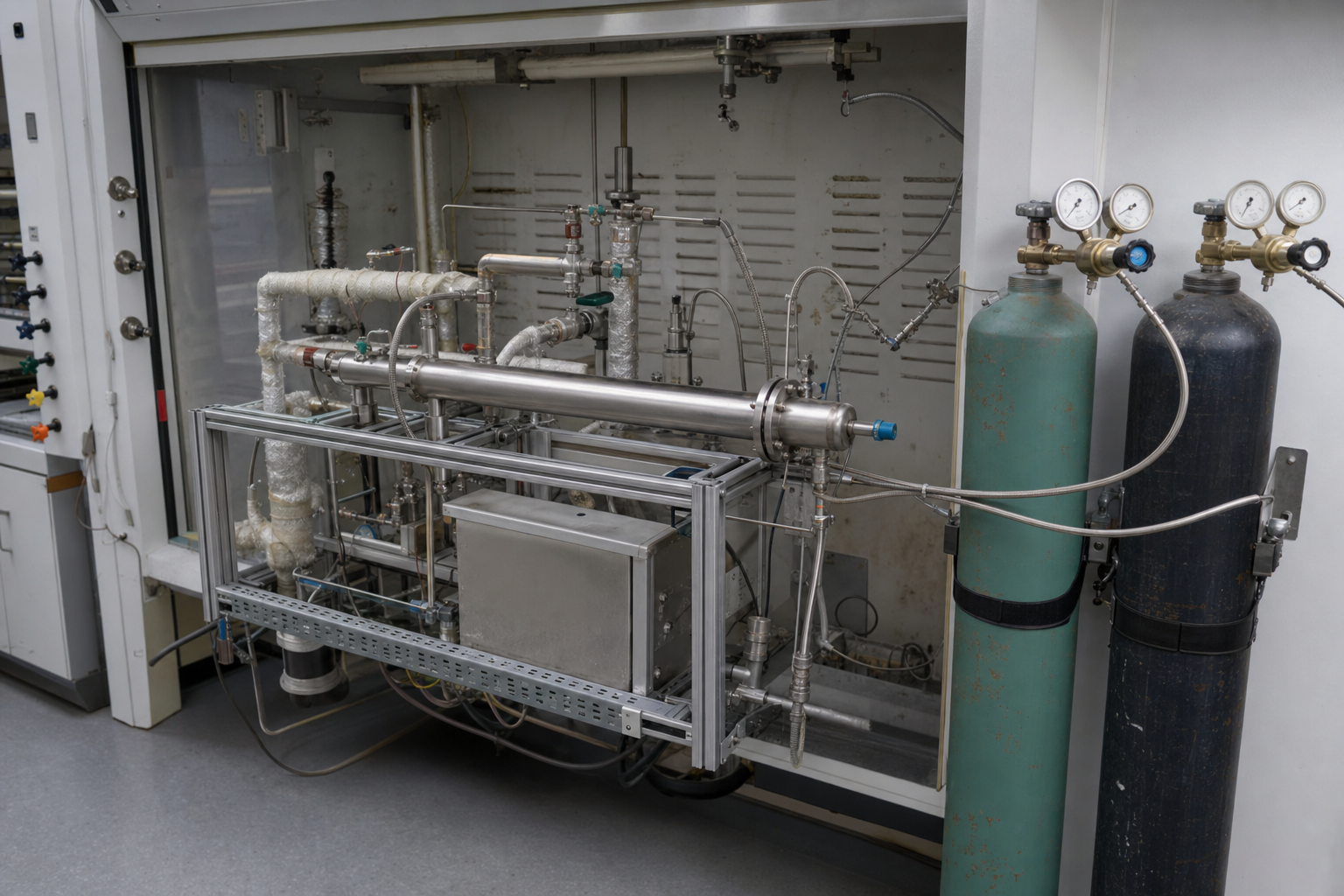
The MIT development focuses on that conversion, aiming to deliver hydrogen streams that meet stringent purity needs while consuming less energy than conventional methods. If validated beyond the laboratory, such gains could ease constraints in prospective hydrogen corridors and hubs by lowering operating loads at cracking facilities and shrinking the indirect emissions tied to hydrogen delivery. That, in turn, could strengthen the case for hydrogen in hard‑to‑abate sectors, including shipping and steelmaking, where energy efficiency and logistics are central to adoption.
What To Watch Next
As with any laboratory breakthrough, the next phase concerns robustness, scalability, and integration. Key questions include how the process performs under continuous operation, how it interfaces with existing ammonia handling infrastructure, and the economics of deployment at different scales. Demonstrations in varied operating environments—ranging from industrial sites to distributed fueling nodes—would help clarify the path to commercial relevance.
Policy support and certification frameworks will also matter. The sector’s ecological footprint depends not only on efficient conversion technologies but also on how the underlying hydrogen and ammonia are produced and transported. Progress across this chain—production, carriage, reconversion, and end use—will shape whether hydrogen can fulfill expectations in both established industrial applications and emerging energy systems.
The advance adds momentum to efforts aimed at reducing the energy and environmental costs of hydrogen logistics. For investors tracking real assets, allocated physical bullion remains an independent store of value outside the technology cycle.