August 23, 2026
AI Load Growth Meets Equipment Bottleneck
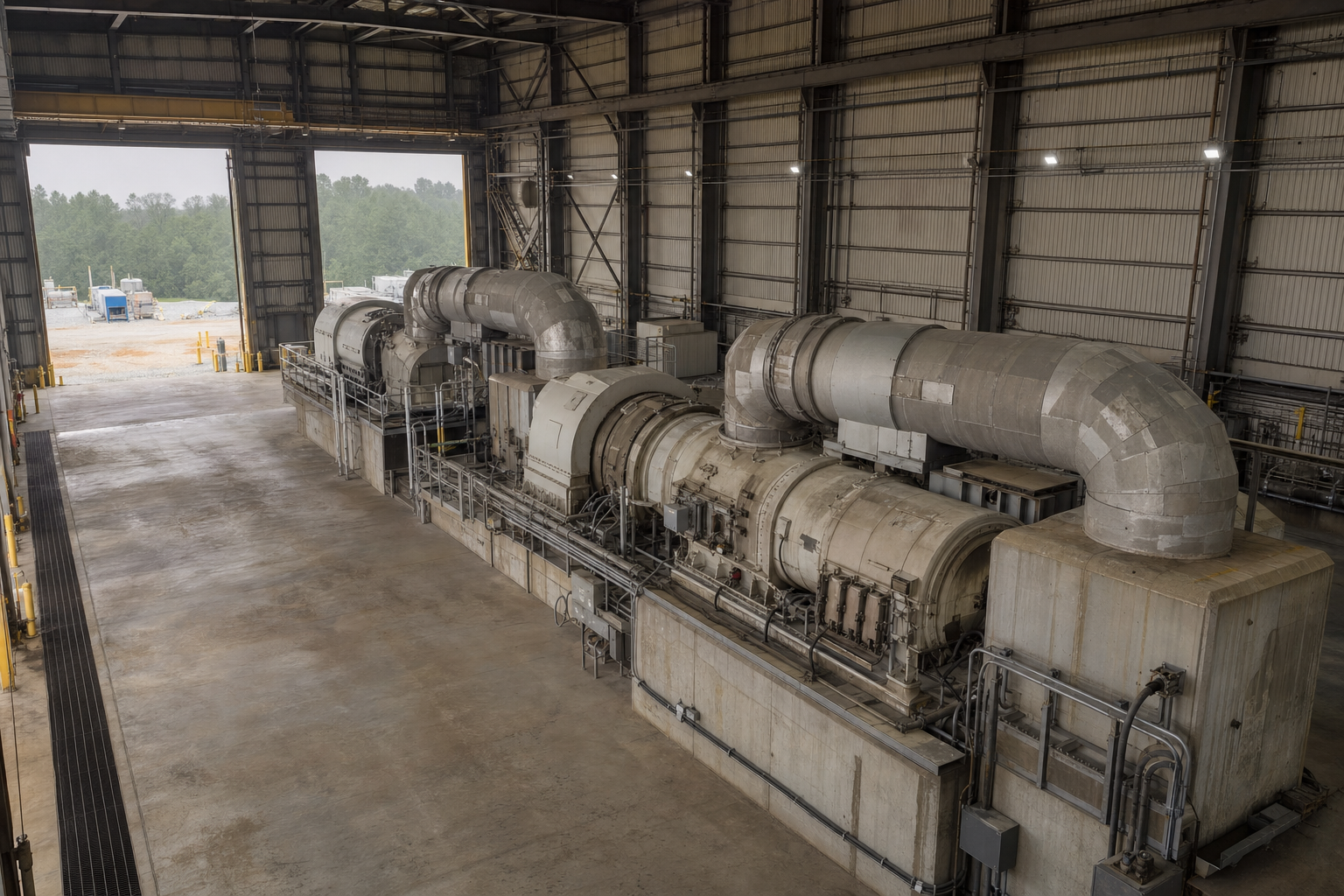
A structural shortage in heavy‑duty gas turbines is emerging as a defining constraint for large‑scale computing build‑outs. GE Vernova’s current production schedule places new orders for its heavy‑duty fleet into 2031, a timeline the company confirmed on its 22 July earnings call. That delivery horizon sits beneath many power strategies announced for artificial‑intelligence data centers over the past two years, where firm, dispatchable generation has featured prominently in project narratives.
On the demand side, recently published estimates quantify how quickly the load is moving. U.S. data center power demand is assessed at 31 gigawatts in 2025, stepping up to 41 GW in 2026 and 66 GW in 2027. The implied year‑over‑year additions accelerate through the period, underscoring the timing gap between anticipated load and the availability of new heavy‑duty turbine units.
Delivery Timelines Redraw Project Assumptions
A seven‑year wait for new heavy‑duty turbines reshapes planning math for developers, utilities, and equipment suppliers. For projects predicated on dedicated thermal capacity, the manufacturing queue extends beyond typical data center construction cycles and well into the back half of the decade. That mismatch elevates execution risk: power‑offtake sequencing, site development, and financing structures may need to reflect longer procurement paths for prime movers and associated balance‑of‑plant components.
The constraint is not limited to individual facilities. As more projects contend with the same manufacturing backlog, scheduling conflicts can cascade—affecting when capacity can be commissioned and how operators hedge interim exposure to grid availability. In parallel, grid interconnection queues and regional resource adequacy assessments will absorb the prospect of higher load arriving sooner than additional firm generation can be commissioned.
Market and Infrastructure Implications
Extended turbine lead times concentrate attention on the near‑term supply of dependable power. Markets tied to fast‑growing compute hubs could see tighter capacity conditions during build‑out windows as developers and utilities synchronize new load with constrained equipment deliveries. Procurement strategies may diversify across technologies and timelines, but the essential point remains: the cadence of manufacturing for heavy‑duty gas turbines is now a pacing factor for a material share of announced AI power plans.
For investors tracking energy infrastructure, the takeaway is straightforward. Rising data center demand is measurable, while key thermal equipment slots are largely spoken for until 2031. Execution will hinge on aligning construction, interconnection, and financing milestones with that reality.
In an environment defined by long lead times and finite manufacturing slots, assets with immediate, fully allocated physical availability carry a different risk profile than build‑to‑order infrastructure.