September 17, 2026
Patent Targets Diesel Consumption In Haulage
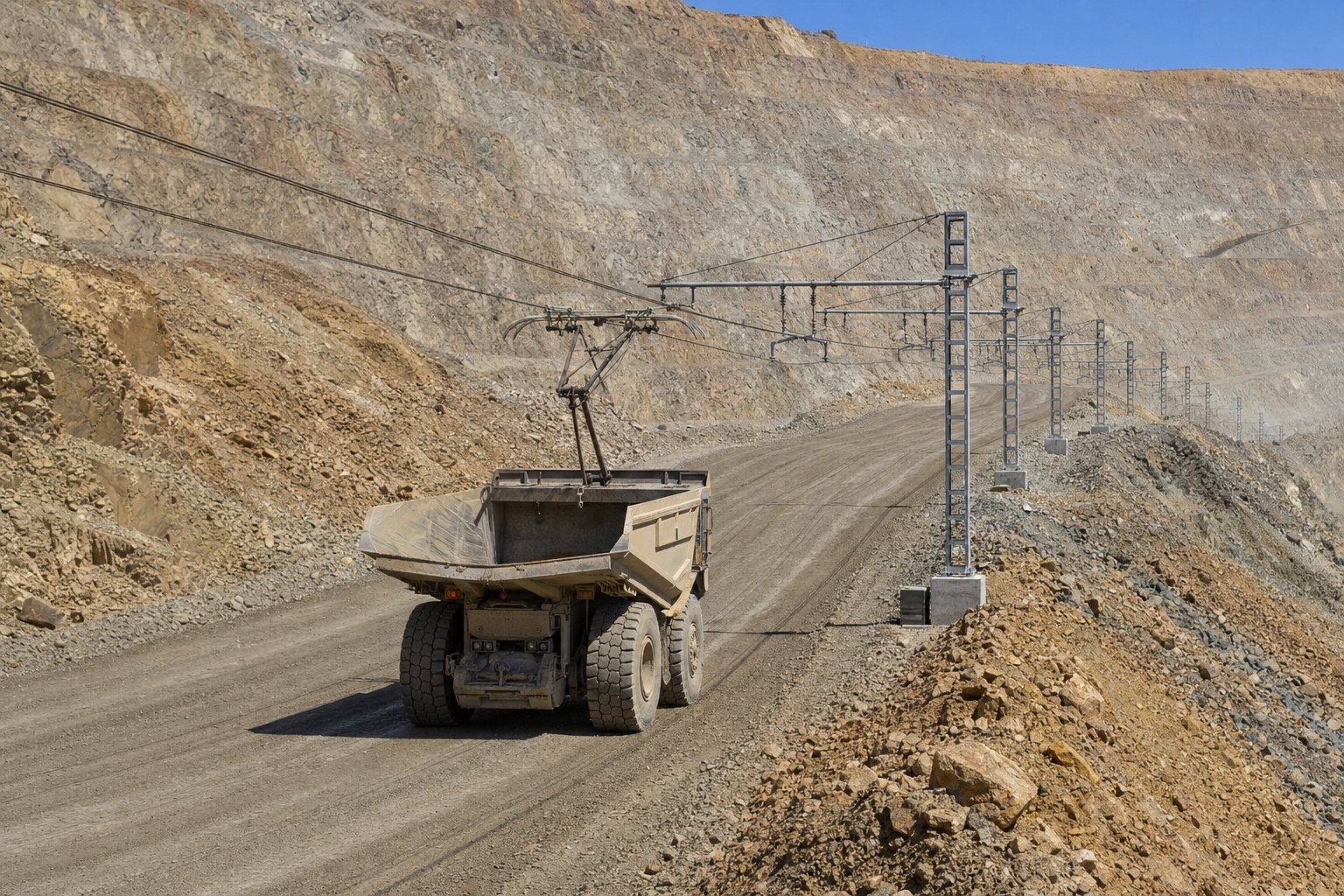
First Quantum has secured patent protection for a trolley‑based haulage system it says can reduce diesel consumption by 90% and accelerate the performance of battery‑electric trucks on mine ramps. The move addresses one of the most diesel‑intensive activities in large open‑pit operations: moving ore and waste on steep gradients, where fuel use, heat load and particulate emissions peak.
Trolley systems feed power to mobile equipment via overhead lines, allowing trucks equipped with current collectors to draw electricity directly while climbing. By shifting propulsion to grid power over designated ramp segments, the approach reduces reliance on onboard combustion and extends the useful range and duty cycle of battery‑electric platforms. First Quantum characterises its design as a step that both suppresses fuel burn and raises haul speeds under load, two levers that traditionally trade off against each other in mine planning.
Details of the underlying claims were not disclosed in full, but the protected architecture is positioned to integrate with the accelerating shift toward battery‑electric haulage. In practice, trolley infrastructure is usually paired with strategic ramp electrification, substation upgrades and energy‑management systems capable of handling rapid load changes as trucks connect and disconnect from the catenary.
Context: Cost, Emissions And Fleet Transition
Diesel haulage remains a dominant source of Scope 1 emissions and operating cost variability in large surface mines. Fuel price swings, ventilation needs, and decarbonisation targets are driving operators to evaluate alternatives ranging from high‑efficiency diesel‑electric trucks to hydrogen and full battery‑electric fleets. Trolley assist has re‑emerged in this mix because it can deliver immediate propulsion benefits on the most energy‑intensive portions of a cycle without requiring continuous charging infrastructure across an entire pit.
Potential advantages include lower litres‑per‑tonne moved, reduced engine maintenance and thermal stress, and the ability to downsize onboard energy storage on battery trucks, cutting weight and improving cycle consistency. Practical constraints remain: capital outlays for overhead lines and substations, power availability and quality, interoperability across truck models, and the need to maintain safe clearances through evolving pit geometries.
What To Watch Next
Patent protection signals an intention to commercialise or license the technology as mines re‑design pits and ramps for electric mobility. Key markers ahead will include demonstration segments in active pits, integration with OEM battery‑electric haul trucks, and data on utilisation, throughput and total cost of ownership under real‑world duty cycles. The pace of grid connection upgrades and the carbon intensity of supplied power will also shape net‑emissions outcomes.
For holders of allocated physical precious metals, changes in mine energy intensity and haulage efficiency can influence long‑term supply costs and project economics across the metals complex.